Beam Puts 80.1 on Terminal-Bench in 23B Active Parameters
Reflection's Beam is a 501B MoE with 23B active parameters, 80.1 on Terminal Bench 2.1 and 80.9 on SWE-bench Verified. Apache 2.0 weights this month.
63 posts
Reflection's Beam is a 501B MoE with 23B active parameters, 80.1 on Terminal Bench 2.1 and 80.9 on SWE-bench Verified. Apache 2.0 weights this month.
Strata runs Qwen3.8-Flash-Next, a 125B MoE, on 12GB consumer cards: 94 tok/s write speed at Q2_0 on an RTX 5070, with an OpenAI/Anthropic-compatible server on localhost.
Claude Sonnet 5.5 scores 70.6% on Terminal-Bench 4.0 vs Sonnet 5's 10.3%, at the same $2/$10 per-million pricing but up to 30% cheaper per task.

Fireworks Research's Ember-1 is a Kimi K3 derivative that drops 35-50% of reasoning tokens at matching accuracy, priced against K3's $3/$15 per M token rates.
Hugging Face's tokenizers v1 release candidate encodes 3-30× faster than v0.23 with identical token IDs, via bitstream splitting, word caching, and a no-alloc merge loop.
Opus 5.5 ships at $4/$20 per MT with $0.20 cache reads, beating GPT-6 Astra at 20% of the cost per task.
Claude Code 2.1.277 reads AGENTS.md when no CLAUDE.md exists, so your existing agent file takes effect in Anthropic's CLI with zero migration.

Vals AI gave Claude Fable 5.1 Urquhart's unsolved Cyphral Distich: solved in 44 minutes, 176k tokens, zero interjections — and it went on to decode the 285-number Octastich too.
Google's eighth-gen TPUs split into TPU 8t for training (121 ExaFlops, 9,600 chips) and TPU 8i for inference (288GB HBM, 80% better perf-per-dollar).
AMD's Threadripper Halo Station packs a 96-core CPU with dual MI350P accelerators and up to 576GB of HBM3E — a $150K desktop that runs trillion-parameter models locally.

An unnamed internal model plus ~10,000 coordinating agents closed the Navier-Stokes Millennium Problem in ~88h (130B tokens), with a verified Lean proof. The capability step OpenAI's flagging.
GPT-6 Astra saturates benchmarks and raises the bar on computer use, coding, and cybersecurity. Teams must now reconsider whether open-weights or smaller fine-tuned agents remain cost-effective.
NVIDIA's NVHBM moves memory control to the HBM stack itself, not the GPU. This architectural shift reveals memory bandwidth, not compute cores, is the real scaling bottleneck for AI inference.

Google's Gemini 3.8 Flash delivers frontier-level coding and reasoning at Flash speed and cost ($0.75/1M in tokens). A Cyber variant targets vulnerability discovery and patching.

Quantization-Aware Healing distills a 4-bit model from the pre-compression teacher, winning 7 of 9 benchmarks over its bf16 source.
IBM's Granite 4.2 — 3B/8B/30B, Apache 2.0, 512K context, thinking/non-thinking switch, and agentic RL on 8B/30B with real SWE, terminal, and search environments.
Z.ai open-sourced GLM-5.3 (753B MoE). 88.2 on Terminal Bench 2.1 and 28.3 on TB 3.0, serving via vLLM/SGLang with a reasoning_effort flag and 23 existing quantizations.
TileRT 1.5 runs a 1T-param Xiaomi model at 1000+ tokens/s on a single 8x B200 node. Here's the exact stack, commands, and where it fits for low-latency serving.

On 20 August, a model called Ox Alpha appeared on OpenRouter — free, 1M context, labeled a "stealth model" with an anonymous developer. Within 48 hours the speculation was circling: Z.ai's unreleased GLM, Microsoft's MAI, xAI. What is actually in the record, and why the anonymity is the real story.
Qwen 3.8-27B is the new dense flagship you can run on a single 24-32 GB GPU. It jumps to 73.0 on Terminal Bench 2.1 (up from 63.4), adds native image and hour-scale video understanding, and ships under Apache 2.0. What changed versus Qwen3.6-27B, how to run it at 4-bit, and the catches I would watch.
DeepSeek's re-post-trained DeepSeek-V4-Flash-0731 scores 82.7 on Terminal Bench 2.1 — reportedly beating its own near-6x larger V4-Pro-Preview — and now speaks the Responses API natively for Codex-style harnesses. What actually shipped, how to split high vs max effort, and the verbosity caveat that quietly resets the per-task math.
vLLM 0.27.0 (Aug 10) ships JIT warmup and runner-owned Triton warmup that eliminate first-request compile stalls, plus Kimi K3 support — but the torch 2.13.0 upgrade is a breaking change that needs migration testing before you bump.
Copilot Pro now meters every model call, Opus moved to Pro+ only, and limits split 5X between tiers — budget for metering.
vLLM v0.27.0 lets hybrid SWA+full attention models run through offline inference, closing the gap between eval and serving — plus a breaking torch 2.13 upgrade.
Microsoft Agent Framework ships a batteries-included harness: chat-history persistence after every model call, plan/execute modes, approval, and telemetry — resumable by default.
Meta's Muse Code beta brings parallel sub-agents in isolated Git worktrees and a crash-safe event log, offering a free terminal agent alternative to Claude Code.
vLLM v0.26.0 adds runtime draft-weight updates, so you can retune speculative decoding without restarting the engine and flushing the KV cache.
Amazon is deprecating Nova Premier, Omni, Reel and Canvas in a strategic pivot. Audit your Bedrock calls now, before a deadline lands.
Huawei Cloud's new Agentic Infra adds PB-scale memory storage and unified scheduling. What this means for long-horizon agent tasks and where the real constraint sits.
CVE-2026-59726 lets unauthenticated attackers execute shell commands, steal LLM keys, and poison agent memory via Ruflo's exposed /mcp endpoint. Upgrade to 3.16.3 and audit immediately.
NVIDIA embeds sparse linear algebra solvers into the Agent Toolkit—cuISS, cuDSS, cuEST—so autonomous design agents call physics simulation without leaving the flow. Free libraries, GPU-only execution.
AMD's Zen 6 EPYC Venice debuts next week with up to 576 cores, 12 TB/s memory bandwidth, and native AVX-1024 support. Here's what changes for AI infrastructure.

Straiker's STAR Labs found 36% of successful coding agent attacks achieve remote code execution on developer machines holding source code and cloud keys. MCP ecosystem unvetted.
Sovereign AI isn't data residency. It's territorial, operational, technological, legal—and financial control. The three case studies that changed CFO thinking in Q1 2026.
Cognition's SWE-1.7 adds 12.2 points atop an already-trained base, challenging the field's assumption that RL post-training hits a hard wall.
Tencent's Hy3 benchmarks between models 2–5x larger by parameter count. 256K context, Apache 2.0, 1 yuan per million input tokens. The catch: vendor benchmarks need independent testing.

University of Waterloo's PAW system compiles fuzzy-function specs into 23MB LoRA adapters that match 32B model accuracy on a 600M interpreter—no API calls, no cloud dependency, 30 tok/s on MacBook M3.
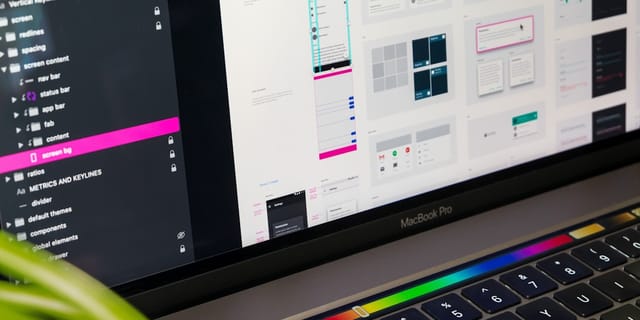
A2UI v0.9 flips the script: agents declare UI intent against your existing design catalog, not invent components. What changes for agentic architectures.
Z.AI's open-weights GLM-5.2 hits 81% on Terminal-Bench, undercutting GPT-5.5 for a fraction of the cost. Here's the benchmark breakdown.
Google's open 26B diffusion model hits 700+ tok/s on consumer GPUs with day-zero vLLM support. Here's what the bidirectional architecture changes for local inference.
NVIDIA's next-gen Vera Rubin drops standard CPU memory from 54TB to 28TB per rack. Here's what the LPDDR5X shortage means for AI infrastructure.

Microsoft found Claude Code's GitHub Action exposes runner secrets via the Read tool. Here's the exact attack path and how to lock it down.

The SEC filing exposes a nine-to-one burn-to-revenue ratio. Here is why local inference is shifting from a privacy play to a hard P&L requirement.

OpenAI's IPO filing ends the era of subsidized frontier AI. Here's what the pricing shift means for local inference, enterprise contracts, and your agentic stack.
By 2026, 70-75% of enterprise apps will use low-code platforms. AI-powered low-code will drive 80% of app development by 2029, mainly from non-IT users. Yet 40% of agentic AI projects face cancellation due to governance gaps. OutSystems, Mendix, and Appian lead the market. Success requires training, governance, and embedded security.
NVIDIA's Vera CPU benchmarks show it competes directly with EPYC and Xeon, but software maturity and platform lock-in dictate adoption.
AMD's next-gen Ryzen AI Max chips bring desktop AI consolidation, massive unified memory, and high NPU TOPS to compact workstations starting this fall.
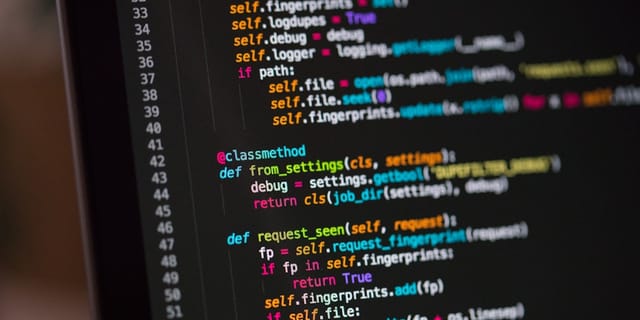
Claude Code 2.1.147 renamed /simplify to /code-review and dropped the auto-fix behavior. The new command reports bugs at chosen effort levels but no longer changes code.
Anthropic shipped MCP tunnels on May 19. Claude agents can call internal databases, ticketing systems, and on-prem APIs through one outbound connection — no inbound firewall rules required.

vLLM 0.21.0 shipped Friday with a quiet fix: thinking_token_budget was being silently ignored when MTP speculative decoding was enabled. If you serve reasoning models with spec decode, you have been paying for it.

A server-side bug in Claude Code v2.1.100+ inflates every request by roughly 20K cache_creation tokens — about 40% overhead. Pin v2.1.98 until fixed.

llama.cpp renamed the MTP flag on May 13. The old --spec-type mtp is silently ignored. If your tok/s dropped from 140 to 70 you are likely running without speculative decoding.
Eighteen months after Anthropic released MCP, the ecosystem is wide enough that picking the wrong servers slows your agent down. Here is the practical short list — what to install, what to skip, and the trap most people fall into.

The same Qwen3.6-27B that ran at 70 tokens/sec on a 4090 in January was running at 140 tokens/sec by April. Nothing changed about the model. Speculative decoding moved from research curiosity to default. Here is what it actually does.

Anthropic is splitting Claude billing on June 15 — Agent SDK and ACP usage moves to a capped credit pool ($20/$100/$200) at full API rates.
Three model releases in three weeks moved local AI from 'good enough for hobbies' to 'good enough for production'. Here's what changed and why it matters.
A practical guide to running Qwen3.6-27B on consumer hardware in 2026 — memory requirements per quant level, recommended runners, and the MTP trick that doubles your tokens per second.
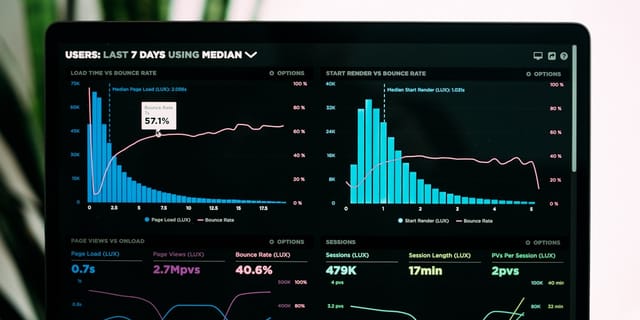
Qwen3.6-27B running locally now scores within 10 points of frontier closed models on SWE-bench Verified. The benchmark table, lined up side by side.
Anthropic shipped Opus 4.7 on April 16, 2026, with a seven-point SWE-bench jump, the 1M context window now generally available with no premium, and a new task budget primitive for agent loops.

Google released Gemma 4 on April 2, 2026 — four variants from 2B to 31B, with 256K context, native vision and audio, and Apache 2.0 licensing. Here's what it's for, where it fits, and how to run it.
Anthropic released Opus 4.6 on February 5, 2026, with a 1M token context beta, agent teams, adaptive thinking, and developer effort controls — all at the same price as 4.5.

Anthropic's latest model achieves state-of-the-art results in agentic coding and brings meaningful improvements across reasoning, mathematics, and everyday tasks.

Google's Gemini 3 Pro brings generative interfaces, 1M token context, and state-of-the-art multimodal reasoning to developers and consumers alike.