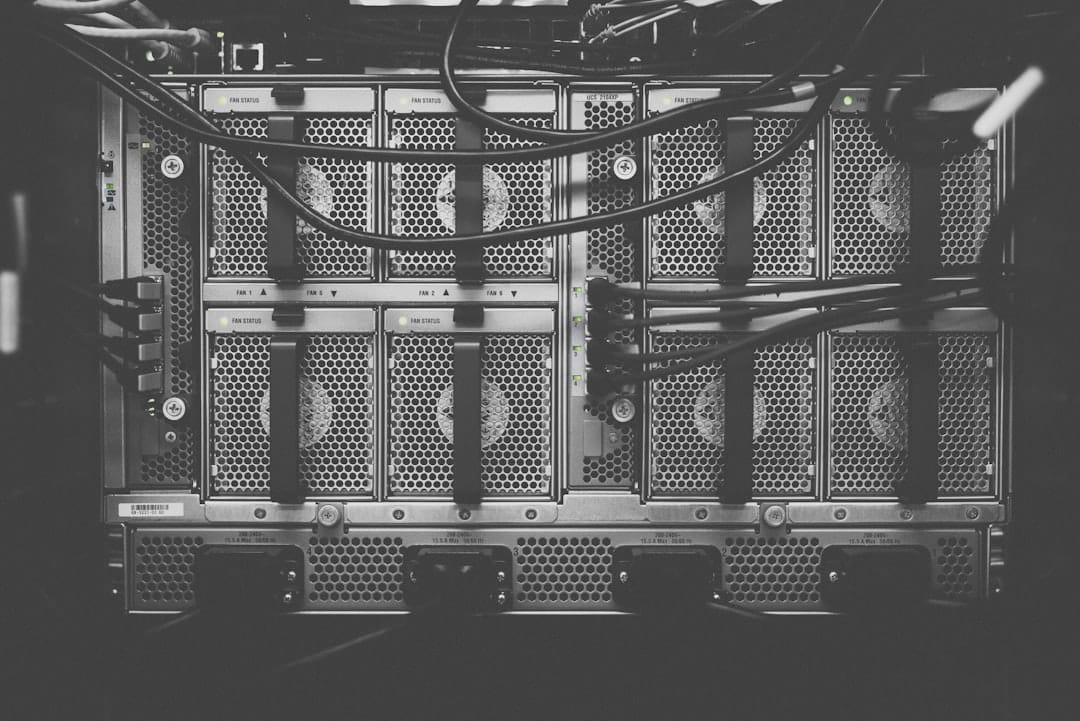
AMD's Threadripper Halo Station moves server-grade AI memory onto a desktop, but at a price that keeps it firmly in enterprise territory.
At IFA 2026, AMD announced what it calls "the most powerful workstation in the world." The Threadripper Halo Station pairs a 96-core Threadripper Pro 9995WX with dual liquid-cooled Instinct MI350P accelerators. AMD claims it can run trillion-parameter models.
That's a lot of compute on a desktop. But the headline spec — and the reason this matters for anyone running large models — is the memory capacity.
The Spec Sheet
| Component | Detail |
|---|---|
| CPU Host | Threadripper Pro 9995WX, 96 cores, 5.4 GHz boost |
| GPU | 2x Instinct MI350P |
| System memory | 2TB DDR5 |
| Cooling | Liquid-cooled CPU and GPUs |
| GPU memory | 144GB HBM3E per accelerator, up to 576GB HBM3E |
| CPU TDP | 350W |
| GPU TBP | 600W (per accelerator) |
The base configuration ships with two MI350P accelerators, each with 144GB of HBM3E, giving 288GB of HBM3E total. AMD says there's a "path to four," which would bring the system to 576GB of HBM3E.
The MI350P itself is built on TSMC N3 with 128 CDNA 4 compute units. Each accelerator is rated for up to 600W. That's a lot of heat to move out of a tower chassis — hence the full liquid cooling.
Where the Memory Ceiling Bites
For local AI work, the gap between 288GB and 576GB of HBM3E is the story.
A 70B-class model in 4-bit quant fits in a . But once you start running mixture-of-experts models with billions of active parameters, or fine-tuning on large datasets, you blow past 288GB quickly. The same is true for long-context workloads with big key-value caches.
That's what makes the "path to four" the interesting part. Two accelerators are practical for a good chunk of serious work. Four accelerators open up the shelf for entire model classes that previously required a rack or an eye-watering cloud bill.
What It Will Cost
"Likely costs hundreds of thousands of dollars" is the summary from the report.
Tom's Hardware breaks down the street price of the core components alone — memory, CPU, and dual GPUs — at over $100,000. Configure higher with storage, power, and cooling, and it can easily climb over $150,000.
The line items stretch the imagination:
- The Threadripper Pro 9995WX alone clocks in at around $11,000 to $12,000
- 2TB of DDR5 costs about $50,000 right now
- MI350P accelerators are estimated at around $20,000 per accelerator
For context, the Lenovo ThinkStation P8 — which uses a Threadripper Pro as its host — currently lists at $334,463 maxed out with 2TB of DDR5 and dual Blackwell accelerators.
This puts the Halo Station well outside the obvious homelab budget. But it's worth noting as the bar-setter for what's possible in a desk-side form factor.
Open Questions and Where This Leaves You
AMD has yet to share prices or a release date, and no OEM partners have been announced. The workstation shown at IFA only has room for two accelerators, both liquid-cooled alongside liquid cooling for the Threadripper host.
I would not buy into this yet. The spec sheet is impressive on paper, but there's no third-party benchmark evidence that it actually hits trillion-parameter scale in practice. And with no release date, you’d be part of no one's decision to be able to verify a unit.
That said, the signal is clear for anyone who run local inference at scale: the bottleneck has been memory capacity on a desktop. AMD is moving the ceiling at 576GB of HBM3E and stating a reason. When the accelerator and memory costs eventually drop — which they have seen in every AI cycle — that's a capacity level we'll see in
small form factor years.
For now,
this is one for the enterprises — the ones that sign the purchase orders with commas. They're going to get a workstation that
Sources: