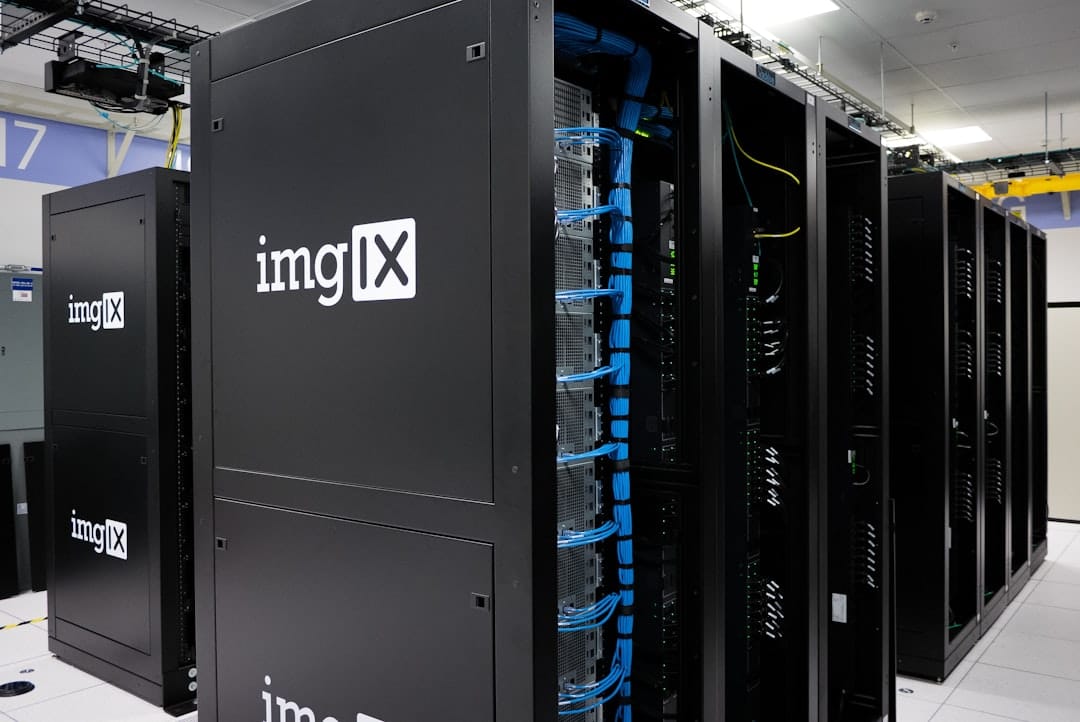
AMD announced this week that its sixth-generation EPYC "Venice" processors will debut on July 22–23 at the Advancing AI event in San Francisco. The new Zen 6 architecture is the first public confirmation of specs, and the numbers mark a step-change in server CPU density and memory bandwidth — particularly for AI workloads that are starved for both.
The Headline Specs
Venice ships in two configurations:
| Spec | Single-Socket | Dual-Socket |
|---|---|---|
| Max cores | 288 per socket | 576 total |
| Max threads | 576 per socket | 1,152 total |
| Memory bandwidth | 12 TB/s per socket | 24 TB/s |
| Cache | 1.2 GB per core | Scales to 345 MB per core |
| TDP | 500W (max) | 1 kW total |
The 12 TB/s per socket memory bandwidth is the number that actually matters for AI. The previous generation EPYC (Bergamo) maxed at 6.4 TB/s. Venice nearly doubles it. For models that are memory-bandwidth-bound during inference — which is most of them — the delta is measurable.
What This Means for Local AI
HPCs and data-center builders care first. But the infrastructure cascade matters downstream. AMD's aggressive release schedule for Zen 6 — three SKU variants launching simultaneously, followed by HPC-specific variants in Q4 — signals they expect rapid adoption. When server CPUs scale that aggressively on bandwidth, cloud providers adjust their inference hardware stacks. The ripple effect reaches consumer hardware pricing and availability within two quarters.
For teams running local AI on CPU-only systems (increasingly common for edge deployment and small-scale batch workloads), Zen 6's memory bandwidth is the headline. A single Ryzen 9 9950X3D built on a later Zen 6 derivative would push memory bandwidth well past what the current generation can muster. If you are planning a hybrid CPU-GPU inference rig for the next 18 months, wait for Zen 6 consumer parts before locking hardware.
The AVX-1024 Story
Venice introduces native AVX-1024 support — full 1024-bit SIMD operations in hardware. This is not a gaming feature. It is a direct enabler for quantized inference and matrix operations on CPUs. A single core running native AVX-1024 can hit double the arithmetic throughput of the previous generation on 4-bit or 8-bit vector operations.
This changes the calculus for edge AI. You can now run moderately-sized quantized models (13B–34B parameters) on a single CPU socket without a discrete GPU. The latency will not match a GPU, but the power draw and the operational simplicity make it viable for temperature-sensitive environments and constrained power budgets.
The Memory Bandwidth Bottleneck It Solves
Inference on consumer and server hardware has been memory-bandwidth-bound for the last year. Every new GPU generation and every new CPU generation bumps the same ceiling: the speed at which weights can transit from VRAM or system RAM into compute units.
Venice's 12 TB/s per socket is aggressive. Compare:
- Bergamo: 6.4 TB/s
- H100 GPU: 2 TB/s
- RTX 5090: 1.46 TB/s
A dual-socket Venice system outperforms two H100s on pure bandwidth. For inference workloads that fit in system RAM (which, with 768 GB of DRAM capacity per dual-socket system, includes nearly all open-weight models), Venice-class CPUs become a viable alternative to discrete GPUs for sustained throughput.
The Catch
TDP sits at 500W per socket. A dual-socket system idles around 150W but pulls a full kilowatt under load. Cooling and power supply specs are not trivial. You cannot fit a dual-socket Venice system into a consumer workstation without significant infrastructure work. Server-class hardware — proper rack PSUs, dedicated cooling loops, 208V input — is mandatory.
Likewise, single-socket deployments are where the real adoption curve lives. Server OEMs will prioritize single-socket Venice systems for the first 12 months, as they fit standard 2U and 4U chassis. Dual-socket Venice will remain a niche play for hyperscalers and AI infrastructure builders with dedicated power budgets.
What To Watch
The launch event is July 22–23. AMD will release benchmarks against Bergamo and (likely) a comparison to the latest Intel Xeon. These numbers will be the most predictive signal of where Venice lands in production workloads. If AMD shows strong inference-per-watt numbers against GPUs, expect hyperscalers to buy. If the benchmarks are CPU-to-CPU comparisons only, the GPU positioning remains unchallenged.
For homelab and local AI teams, the real impact comes in Q4 when Zen 6 consumer parts (Ryzen 9, possibly Ryzen Threadripper) ship. That is when the bandwidth advantage becomes accessible at consumer price points. Until then, Venice is a server story.
Sources:
- https://www.noobfeed.com/hardware/amd-zen6-epyc-venice-launch-july-22
- https://www.amd.com/en/press/amd-announces-advanced-epyc-processors-ai-and-high-performance-computing-workloads
- AMD Advancing AI event, San Francisco, July 22–23, 2026