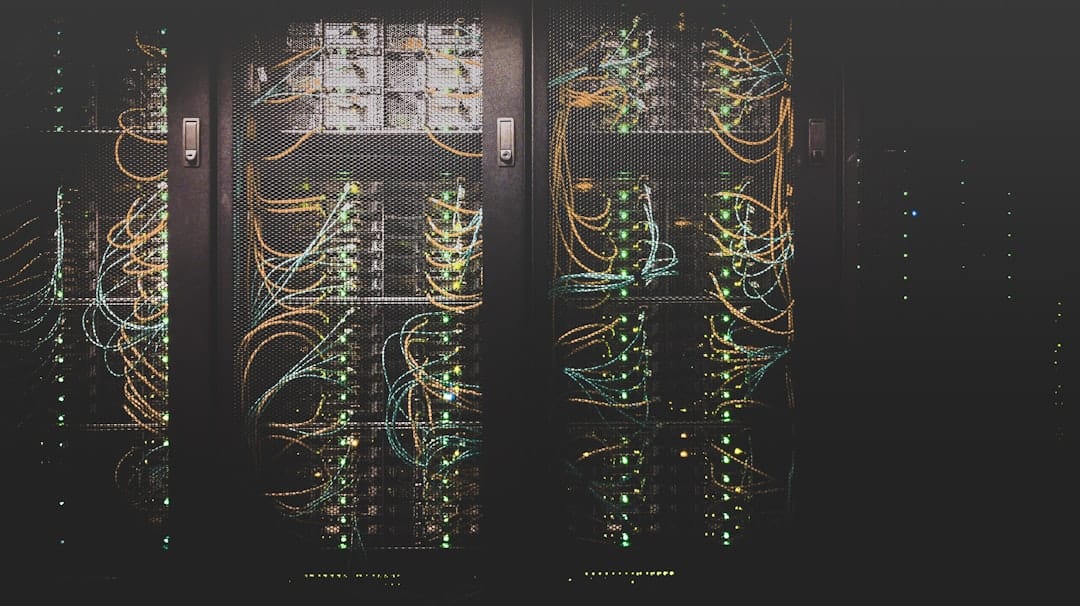
You're looking at GPU clusters for your agentic workflows, but the real blocker isn't silicon. It's the physical ceiling on power. When I started mapping out the infrastructure for local inference and edge agents last quarter, I assumed the constraint was silicon availability or memory bandwidth. I was wrong. The numbers tell a different story.
A modern AI rack is no longer a 10–15 kW appliance. It is pushing 100 kW to 150 kW per rack. The grid interconnection queue for a 50 MW site stretches to 36–48 months in major US regions. You cannot provision compute faster than you can pull megawatts from the grid.
Seattle just formalized this bottleneck. The city enacted a year-long ban on new data center construction, citing grid capacity limits. This isn't a zoning dispute. It is a physical hard stop. When the grid hits its interconnection queue, every new training run and inference cluster moves downstream. The policy moves the bottleneck from a hardware procurement problem to a utility scheduling problem.
The industry response is hardware, not policy. We are seeing a pivot toward modular, containerized data centers. These are not just vendor slides. They are prefabricated, power-dense units that arrive on-site fully wired. The specs matter. A typical modular unit delivers 5–10 MW in a footprint that used to hold 1 MW. They run on advanced liquid cooling, dropping the Power Usage Effectiveness (PUE) from 1.6 down to 1.05. They bypass the 36-month interconnection queue by deploying on brownfield sites with existing substations.
| Metric | Traditional Data Center | Modular / Prefab Unit |
|---|---|---|
| Power Density | 10–15 kW per rack | 100–150 kW per rack |
| PUE | 1.5 – 1.6 | 1.05 – 1.10 |
| Deploy Time | 24 – 36 months | 3 – 6 months |
| Grid Queue | 36 – 48 months | Bypassed via existing substations |
The hardware shift brings its own tradeoffs. Traditional air cooling simply cannot move heat at 150 kW per rack. Modular units rely on direct-to-chip liquid cooling or full immersion tanks. This changes your operational stack. You are no longer managing airflow and hot/cold aisles. You are managing coolant loops, pump redundancy, and dielectric fluid maintenance. The hardware is denser, but the maintenance surface area shifts from IT ops to facilities engineering. You need different contractors, different spare parts, and different safety protocols.
Energy pricing is the silent multiplier here. Historically, compute accounted for 60–70% of a data center's total cost of ownership (TCO). Energy sat at 15–20%. With power draws tripling and grid demand charges climbing, energy is now 30–40% of TCO. You cannot optimize this away with better routing algorithms or lighter model weights. The physics of joule heating do not care about your quantization scheme. A 4-bit model still requires a full 150 kW rack to push inference tokens at scale.
This changes the architecture for agentic systems. You can no longer assume you can spin up a regional cluster in six months. The lead time is now grid permits plus modular procurement. For teams running local AI, this forces a harder look at edge placement. If you need sub-second latency for tool-bridging and your cluster sits behind a 48-month queue, you are building on sand. The modular hardware solves the deployment timeline, but it does not solve the physical heat dissipation problem. You still need a massive substation and a water source for backup cooling.
I would not bet on the grid opening up before the next model generation. The power-per-operation efficiency gains in new GPUs are real, but they are linear. The demand curve for inference is exponential. The bottleneck has moved from FLOPS to megawatts. If you are architecting an agentic stack today, start with the power contract, not the GPU vendor.
Sources:
- TechNewsWorld: AI's Real Bottleneck Is Power, Not Compute
- The Guardian: Seattle enacts year-long ban on new AI datacenters
- TechNewsWorld: How Modular Data Centers Could Solve AI's Infrastructure Problem